
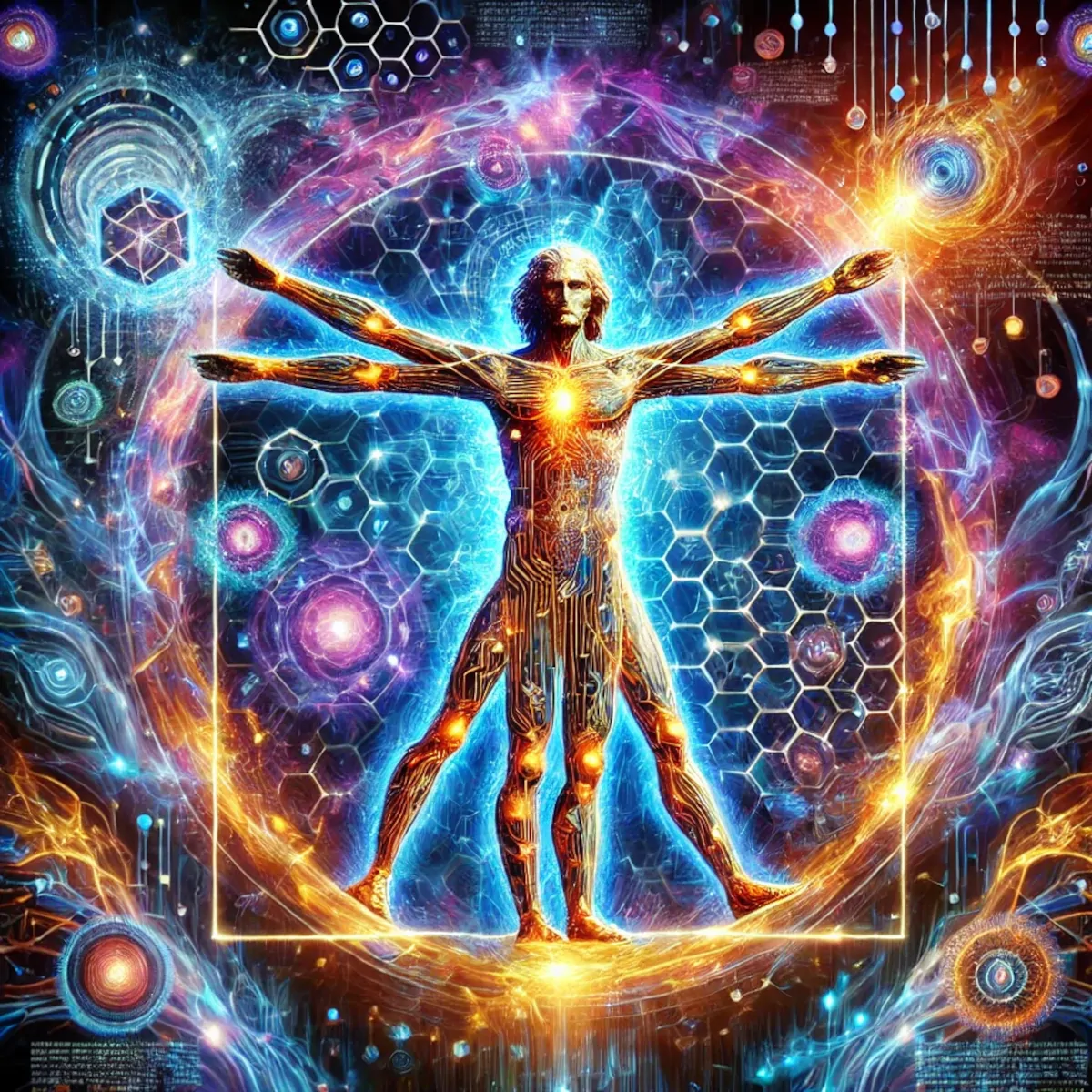
Correspondence of the Cosmos
Prologue: A whisper from the World Soul
Beneath the turning of the stars, the world breathes.
Not in silence, but in secret harmony –
The rustle of leaves, the tide’s slow hymn,
The fire hidden in our blood.
The ancients called it Anima Mundi, the Soul of the World
It is the flame that lights the stars,
The voice that hums in the rivers,
The spirit that leans close when the veil grows thin.
To listen is to awaken.
To awaken is to remember:
We are not apart,
But notes in the same eternal song.
The universe is not silent. It speaks in symbols, in words, in whispers of starlight. For those who learn to listen, life itself becomes a book – each page alive with meaning, each chapter a reflection of the Soul.
Marsilio Ficino, a Renaissance philosopher and dreamer from eighteenth-century Florence, Italy believed the cosmos was not a machine but a living being – what he called the Anima Mundi, the World Soul. To him, the planets were not cold stones in space but radiant presences; the forests not mute wood but living temples. The world was not dead matter – it was spirit.
He imagined the whole cosmos as a kind of book of life, written not in ink but in light. The stars were letters, the rivers were lines, the wind a turning of pages. To be alive, he said, is to take part in this book, to read and to be read.
The World as One Spirit
Ficino’s vision was simple and yet revolutionary: everything is connected. The stars influence our moods, music can heal our hearts, flowers hold patterns of divine intelligence. ‘Nothing is barren,’ he wrote, ‘ for in all things resides a spirit that secretly unites them.’
He believed that music could realign the soul to the harmony of the heavens. A single melody, tuned to the rhythm of the planets, could soothe despair. His idea was that when we live out of tune we feel illness, sadness and disconnection. But when we re-tune ourselves to the harmony of nature and spirit, we rediscover joy, meaning and health.
This harmony is not a metaphor – it is life itself. Think of the way birdsong softens your mood at dawn, or how standing beneath a night sky reminds you of something vast inside yourself. Ficino would say: this is the World Soul speaking to you.
The Soul of the World the Soul in You
The Anima Mundi – the Soul of the World – was described by philosophers long before Ficino, but he gave it a new life. It means that the cosmos itself is alive and that our Souls are sparks of this great fire.
We are not seperate but reflections of the whole. The stars above are echoed in our very cells, just as the tides of the ocean move in sympathy with the waters of our own bodies.
As the philosopher Giordano Bruno wrote:
‘There is one Spirit that pervaded the All and it is in the stone no less than in the star.’
To know ourselves is therefore not self-absorption – it is a remembering that we belong to something vast and eternal. To heal ourselves is to heal our link with the world. And to wound the earth is to sound our own soul.
The Seed of Harmony
Ficino also spoke of the seminal reason of the Soul- the seed of order hidden inside all things. Just as an acorn carries the blueprint of an oak, every soul carries it’s own secret pattern.
This is why life feels like a search. We are not only wandering – we are unfolding. When we live in harmony with our seed, with our inner design, we reel aligned, strong and at peace. When we resist it, we fall into chaos.
The body, in this vision, is not prison but a temple. It is the sacred space where the soul comes to flower. Beneath is prayer. The heartbeat is the drum of creation. Our very bones are made of stardust – proof that we are never seperate from the cosmos.
The 17th-century mystic Thomas Vaughan put it simply:
‘The world itself is a chemical vessel: the stars are its lamps, the flowers its perfumes, the winds its breath. And in man is gathered the sum of it all.’
Edgar Cayce’s Whisper
Centuries later, the American mystic Edgar Cayce (1877-2045) gave voice to the same truth. In trance, he would speak of the soul’s journey through lifetimes, the harmony between body, mind and spirit and the great law of Oneness.
Cayce taught that each of us is part of the whole and that healing comes when we remember this unity. He often said:
‘The spirit is the life; the mind is the builder and the physical is the result.’
How close is this to Ficino’s idea: spirit is the source, mind gives it shape and the body reveals it. Both men remind us that illness, despair, or restlessness are not punishments- they are signs that we have fallen out of harmony. The cure is to realign with the music of the universe: through prayer, through music, through kindness and through communication with nature.
Cayce like Ficino, believed the stars and the Soul are bound together – not by chains of fate but by threads of meaning. The cosmos does not enslave us: it mirrors us.
Halloween and the Elemental Forces
And so, as Halloween approaches, these ideas become especially vivid. The Celts called this season Samhain, when the veil between worlds thins and unseen forces move more freely. It is a time when the presence of the Anima Mundi can be felt more strongly: the whisper of ancestors, the stirring of elemental powers in the wind and fire.
Halloween, in this deepest sense, is not just a night of costumes – it is a reminder that life is porous, mysterious and infused with unseen presences. Ficino would say the Spiritus Mundi is closest now; Cayce would say the spiritual currents are more tangible. Both would remind us: the cosmos is alive and so are we.
The poet Henry Vaughan once wrote:
‘ A nest of stars, a quire of spheres,
And all the music of the years
Rest in my breast Unseen.’
At Halloween, that hidden music feels a little louder. We are asked to pause, to remember that we live not only in houses of brick but in a house of stars.
Living the Correspondence
What does all this mean for us, here and now? It means that every moment is an invitation to tune ourselves to the great harmony. When we listen to music that uplifts us, when we pray or meditate, when we walk among trees or sit by the sea, we are not escaping life – we are stepping more deeply into it.
The correspondence of the cosmos is not abstract. It is in the way a child’s laughter can heal your tiredness, the way moonlight softens your fears, the way forgiveness can clear a heaviness in the body. It is the World Soul singing through every small gesture of beauty.
Both Ficino and Cayce would tell us: the cosmos is not far away. It is in you. The Soul you carry is not seperate from the soul of the world – it is its reflection, its spark, its song.
Closing Reflection
Imagine Ficino, five centuries ago, plucking his lyre to calm his Saturn-haunted melancholy, believing music could draw down the harmony of the heavens. Imagine Cayce, laying in trance, letting his voice carry teachings of Oneness to a troubled century. Different tines, different lands – but one message: the world is alive and we are part of its song.
The cosmos, as they both knew is a great correspondence. Every star speaks to the heart. Every flower reflects the sky. Every breath is a prayer rising to the eternal Spirit that binds us all.
And so, this Halloween, as shadows flicker and the air grows electric remember: you are not alone. You are walking in a living cosmos a world whose spirit sings in your veins.
As Ficino himself said: ‘The human soul stands midway between eternity and time and she is the bond of both.’
This is the invitation of the Anima Mundi and of Cayce’s Oneness: to awaken, to remember and to take our place in the harmony of the cosmos.