
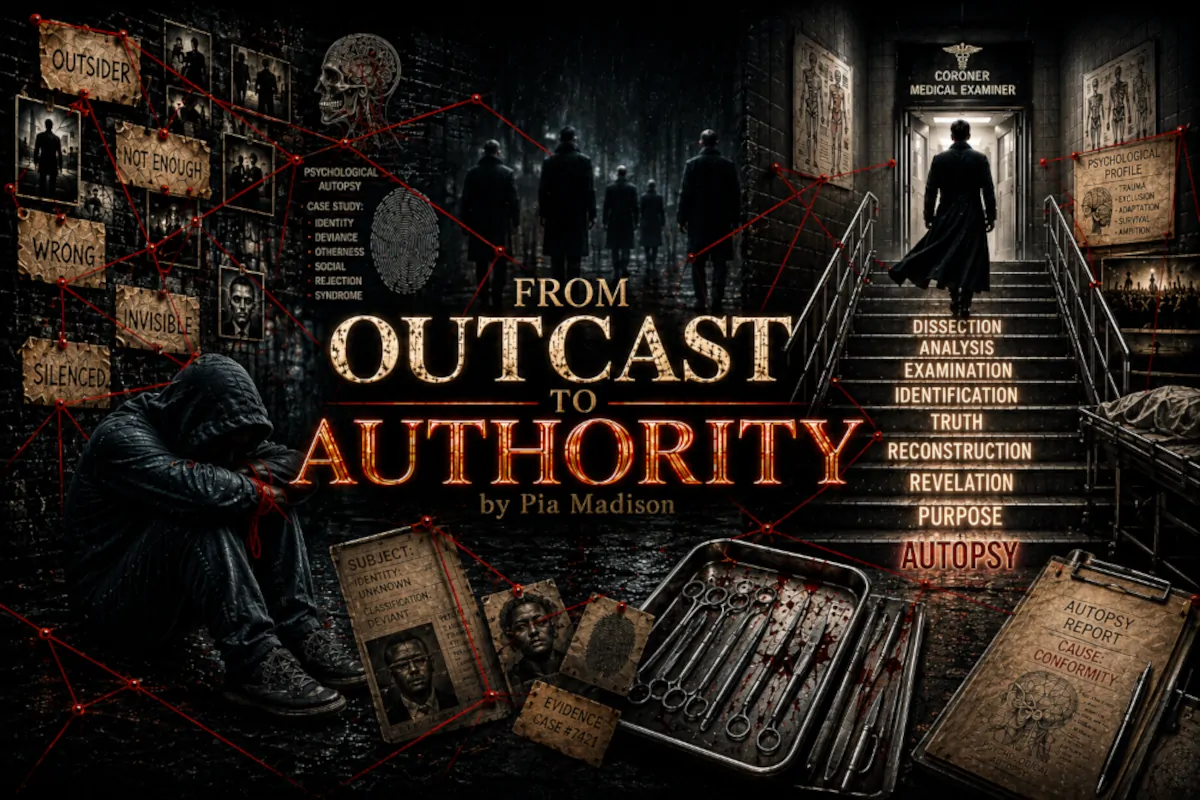
From Outcast to Authority
An Autopsy of Human Connection in the Digital Age
Once upon a time the outsider sat alone beneath fluorescent school lights wondering if they mattered.
Today they sit illuminated by a phone screen at 2am asking the same question.
Different technology. Same hunger.
Long before smartphones, social media algorithms, digital tribes and identity branding, films such as The Breakfast Club, Rumble Fish and The Outsiders quietly documented the emotional fracture lines already forming beneath modern society. These films were never merely stories about teenagers. They were psychological maps of alienation, identity, loneliness, social hierarchy, emotional invisibility and the timeless human need to belong.
The teenagers sitting in detention in 1985 did not disappear. They grew older, entered a digital age, raised children and unknowingly passed the same emotional ache into a new generation now navigating online performance, algorithmic self-worth and emotional exhaustion beneath glowing screens.
The wrapper changed. The longing did not.
Perhaps that is why these outsider films still haunt people decades later. They understood something modern culture frequently forgets: human beings are not stereotypes. Beneath every social label exists an invisible inner world carrying fear, longing, confusion, shame, hope, memory and the desperate desire to be recognised beyond surface identity.
The criminal.
The princess.
The rebel.
The basket case.
The invisible one.
Different masks. Same yearning.
These films were quietly teaching an entire generation about emotional survival. They allowed silence. They allowed melancholy. They allowed wounded characters to exist without immediately turning them into villains, influencers or inspirational slogans.
Most importantly, they understood the profound difference between seeing and knowing.
That distinction may now sit at the centre of our cultural crisis.
Modern society allows us to see almost everything:
-
filtered faces,
-
curated lifestyles,
-
emotional performances,
-
relationship theatre
-
public vulnerability,
-
endless self-disclosure
But knowing another human being requires something slower, rarer and infinitely more uncomfortable:
-
presence,
-
patience,
-
emotional honesty,
-
attention,
-
vulnerability,
-
and time.
Seeing is instant.
Knowing takes commitment.
We have become a civilisation obsessed with visibility while simultaneously starving for recognition.
The teenager posting online at midnight searching for validation is not so different from the teenager sitting silently at the back of the classroom in the past wondering whether anybody can see beyond the surface.
Previous generations feared rejection.
This generation increasingly fears irrelevance.
There is a psychological difference.
To feel rejected hurts.
To feel invisible corrodes identity itself.
And perhaps this is where the autopsy begins:
AUTOPSY REPORT
Primary Symptoms:
-
chronic loneliness
-
emotional exhaustion
-
identity confusion
-
anxiety
-
hyper-comparison
-
fragmented attention
-
performative selfhood.
Contributing Factors:
-
algorithmic validation
-
digital tribalism
-
economic instability
-
loss of real-world community
-
emotional commodification
-
social performance replacing genuine intimacy.
Preliminary Conclusion:
Human beings evolved technologically faster than they evolved emotionally.
For years society believed increased connectivity would naturally create greater closeness. Instead, many people now live in a state of permanent emotional exposure without genuine emotional witness.
We became visible before we became understood.
Young people once hid diaries beneath mattresses. Today many perform their identities publicly while privately wondering who they actually are.
A society that teaches people to market themselves before understanding themselves creates emotional exhaustion disguised as confidence.
This is not simply a technological issue. It is existential.
Modern culture increasingly rewards reaction over reflection, performance over authenticity, exposure over intimacy and speed over meaning.
The result is a generation surrounded by communication yet starving for conversation.
Surrounded by audiences yet starving for tribe.
Surrounded by profiles yet starving to be known.
And yet the emotional DNA remains unchanged.
The outsider never disappeared. The world simply changed costumes.
In Rumble Fish, alienation moved like poetry through black-and-white streets and fractured identity. In the Outsiders, belonging was bound to class, survival, brotherhood and emotional loyalty. In the Breakfast Club, teenagers trapped inside stereotypes slowly revealed the hidden complexity beneath their labels.
Today’s outsider may no longer stand beneath neon streetlights smoking cigarettes in a leather jacket. They may instead sit alone scrolling endlessly through the curated happiness of strangers while quietly questioning their own worth.
Different scenery. Same ache.
What those films captured- perhaps accidentally – was the beginning of emotional fragmentation in modern society. They documented human beings struggling against categories before categories became digitised, monetized and permanently embedded into online identity structures.
The emotional wound already existed.
The digital world simply industrialised it.
MISSING ORGANS
Every autopsy eventually reveals what is absent.
Modern culture has not merely changed communication. It has slowly removed certain psychological nutrients essential for healthy identity formation.
Among the missing organs are:
-
stillness,
-
boredom
-
mystery,
-
emotional patience,
-
deep listening,
-
intergenerational guidance,
-
meaningful rites of passage,
-
real-world belonging,
-
and uninterrupted self-reflection.
Previous generations often formed identity slowly through:
-
conversation,
-
solitude,
-
music,
-
neighbourhoods,
-
books,
-
friendships,
-
mistakes,
-
and lived experience.
Today identity is increasingly shaped publicly, rapidly and under constant observation.
This creates enormous psychological pressure.
To constantly perform the self is exhausting.
To constantly compare the self is destabilising.
To constantly curate the self eventually distances people from who they truly are.
Perhaps the deepest loneliness of the modern age is not physical isolation but psychological disconnection from the authentic self.
People no longer merely fear being disliked.
Many now fear disappearing entirely beneath the noise.
SIGNS OF LIFE REMAINING
Yet despite the diagnosis, signs of life remain.
Art still matters.
Music still matters.
Storytelling still matters.
Authentic conversation still matters.
Human beings continue searching for meaning because meaning is as essential to psychological survival as food is to physical survival.
That is why outsider stories continue resonating across generations. They remind people that behind every social mask exists a private battle invisible to the outside world.
The quiet child.
The difficult child.
The angry child.
The detached child.
The overachiever.
The dreamer.
Often these are not broken people.
They are people trying to survive emotionally in systems unable to recognise their deeper needs.
Perhaps the next cultural rebellion is no longer shock culture, outrage or endless online performance.
Perhaps true rebellion now means something quieter and infinitely more difficult: authenticity.
To remain psychologically real in a world obsessed with performance is revolutionary.
To truly know oneself in a culture constantly demanding self-display is revolutionary.
To sit with another human being without distraction, performance or digital interruption is revolutionary.
The outsider, after all, was never simply someone excluded from society.
Often the outsider was merely the person who could see through it.
That is why so many outsiders eventually become writers, artists, filmmakers, psychologists, innovators, musicians and visionaries. Distance sharpened observation. Loneliness deepened perception. Alienation forced reflection.
The irony is that many people once dismissed as too strange, too sensitive, too thoughtful or too different eventually become the very voices society later turns towards for insight.
From outcast to authority
Not authority through status or domination.
Authority through self-possession.
Through surviving fragmentation without surrendering the soul.
Long before the internet taught people how to become visible, outsider cinema understood something far more important:
Technology changed the costume.
The human heart never changed the script.