
Parentification and the Missing Child: The Price of Premature Maturity
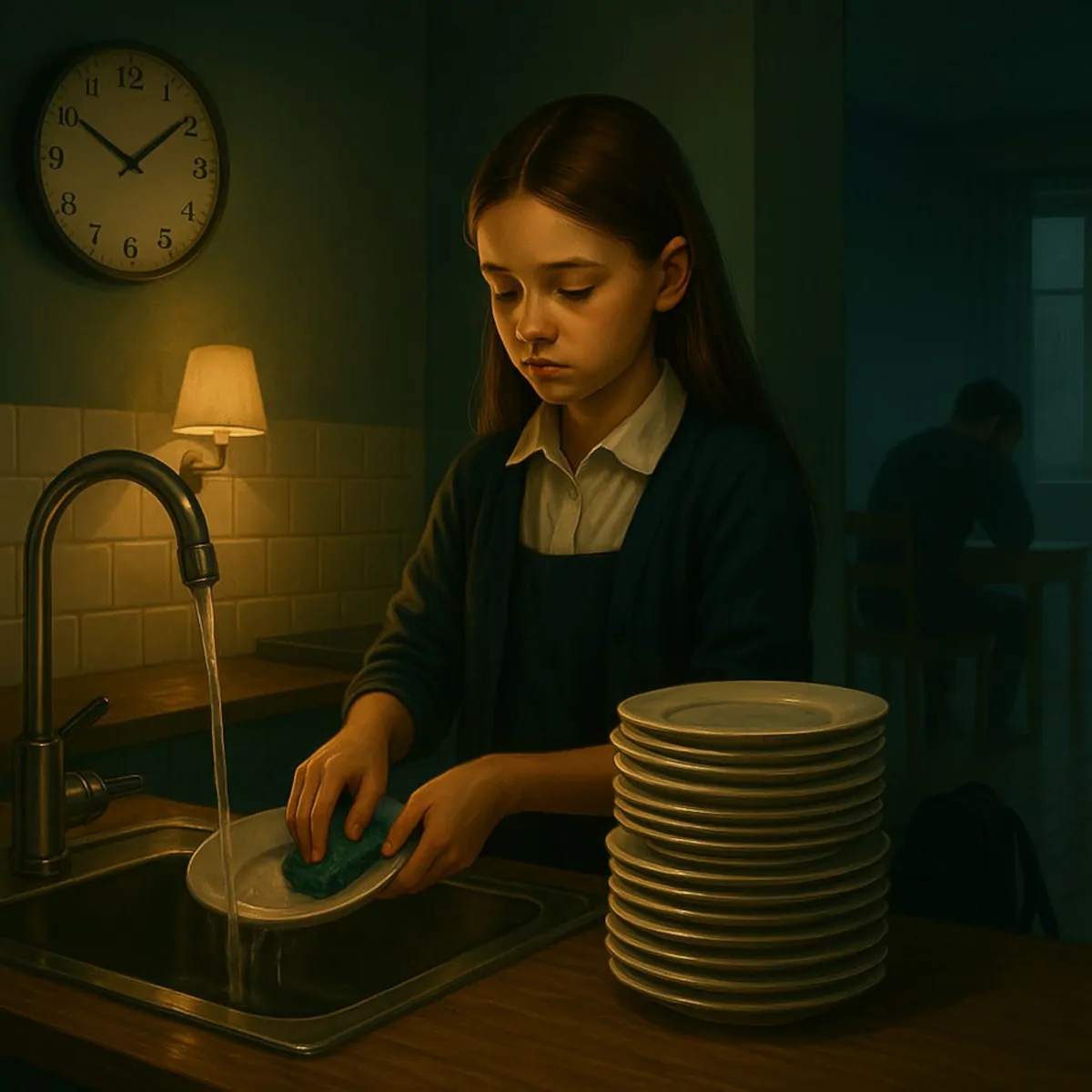
Some children grow up long before they should. They are not born old – they become old, forged in the quiet ache of emotional absence. They grow up in homes where the adults were preoccupied, unstable or unavailable. Where the parent needs comforting and the child steps forward.
This is parentification – the silent exchange of roles where the child becomes the caretaker and the parent becomes the dependent. It is the theft of innocence dressed in the language of responsibility.
Such children are often praised for being “so mature,” “so capable,” “so good.” But no one sees that these compliments are gravestones, marking where childhood was buried.
When Love Becomes Conditional
In emotionally impoverished homes, love is never free. It must be earned – through helpfulness, perfection or silence. The child learns that approval is currency. To be seen, they must perform; to be loved, they must serve.
And so, accomplishment becomes survival. The moment a parent smiles or praises them, their nervous system releases a small rush of dopamine – the brain’s fragile imitation of love.
They learn quickly: I must achieve to be noticed. I must excel to be safe.
The tragedy is that no one sees the desperation beneath their competence. Every gold star, every chore completed, every act of premature wisdom is a cry: Do you see me now? Am I finally enough to keep you here?
The Price of Premature Maturity
The price of growing up too soon is steep. It is a body that learns hypervigilance instead of play. It is a brain sculpted around threat detection – a surveillance that never stops scanning, a nervous system that confuses calm with danger.
The prematurely mature child learns to predict, to soothe, to manage the emotions of others. They become the family’s emotional thermostat, regulating chaos before it ignites.
But in that vigilance, something beautiful withers: authenticity.
They stop asking, stop needing, stop crying.
They learn to smile through exhaustion, to perform normality while their insides ache for safety.
And because their childhood brain links love with usefulness, they grow into adults who confuse exhaustion with worth.
The Heartbreak of Adaptability
Adaptability, in this context, is not resilience – it is heartbreak made invisible. The child adjusts endlessly to others’ moods, learning that peace depends on their compliance. They develop an exquisite sensitivity to emotional tone – the soft sigh, the slight shift in gaze – that signals danger.
They stay quiet, not because they have nothing to say but because speaking their truth risks disconnection. Their silence becomes the ticket to belonging. They become masters of shape-shifting – agreeable, kind, responsible- admired by teachers, trusted by friends. But underneath the competence lies a muted scream: If I stop being useful, will I still be loved?
The Layers of Invisible Trauma
The trauma of parentification is not one wound, but many. It is layered – subtle, complex and enduring.
-
Neglect: The absence of nurturing that leaves the nervous system starved for regulation.
-
Inversion: The unnatural reversal of roles that forces a child to hold what was never theirs to carry.
-
Betrayal: The later realisation that what looked like love was dependence and what felt like connection was exploitation.
These layers fuse into the psyche, rewiring the brain’s neural pathways. The prefrontal cortex becomes overdeveloped – planning, anticipating, controlling. The limbic system, seat of joy and play, grows stunted.
The vagus nerve – the bridge between safety and rest – loses tone, leaving the adult in chronic vigilance. This is the neurobiology of stolen childhood.
What Becomes of That Child When They Grow Up?
They become the adult who cannot stop caring – even when it costs them everything. The rescuer. The fixer. The overachiever. They are drawn to wounded people and impossible situations, subconsciously trying to heal the parent through others.
In relationships, they often choose partners who mirror the emotional absence of their caregivers – unavailable, self-absorbed, or broken. The old wound replays itself: If I can love them enough, maybe I can finally be loved in return.
They are responsible to a fault, loyal beyond reason, generous to depletion. They excel professionally – the boss’s right hand, the dependable colleague- yet they carry a secret fatigue that borders on despair.
They may appear self-sufficient, but it is not freedom; it is exile. They cannot rest because rest feels like failure. They cannot receive help because need feels shameful.
And beneath all the success lies devastating truth, they do not know how to be without doing.
The Unhealed Wound
No matter how many achievements they collect, the wound remains untouched. The missing child inside still whispers: See me. Hold me. Tell me it’s okay to need. But the adult keeps pushing forward- another project, another accomplishment, another crisis to manage.
Over time, this relentless self-suppression manifests as anxiety, autoimmune disorders, depression or numbness that no accomplishment can fill.
Their identity – built on competence – becomes their prison. They are loved for what they do, not for who they are. And so, the wound deepens, hidden beneath the applause.
Healing: Reclaiming the Missing Child
Healing begins with daring to disappoint. With daring to need. With understanding that survival patterns are not personality- they are protective strategies forged in trauma.
Neuroscience offers hope: the adult brain is plastic. Through therapy, somatic work and conscious reparenting, the nervous system can unlearn survival.
The amygdala can quiet. The body can rediscover the rhythm of rest.
One of the most transformative acts we can undertake is to sit quietly with our inner child and ask, “What did I not receive back then?”
The answer may be painfully simple:
“ I needed someone to tell me it was not my responsibility to take care of my parents.”
“I needed to be helpful, spontaneous and joyful- without anxiety.”
And so, healing becomes the process of providing these unmet needs for ourselves – not seeking them endlessly in partners, careers, or external validation. We learn to become the parent we always needed.
The Final Reckoning
Parentified children grow into adults who look like miracles – high – functioning, empathic, capable. But inside, they carry the grief of life halved. They were never truly allowed to be – only to do.
The world may call them strong but strength without softness is survival, not peace. Their greatest task is not to achieve more, but to come home – to the child they left behind in the ruins of duty.
When they finally meet that child again – not as caretaker, but as parent, the cycle begins to end. They discover that love was never meant to be earned, that presence is more sacred than perfection and that healing begins the moment they no longer need to prove they deserve to exist.
As Carl Jung so perfectly said:
“ Consciousness does not come to light without experiencing pain.”
It is through that pain that awareness dawns. And awareness, when met with compassion, becomes liberation.